


Qualcomm has put together a coherent, sellable roadmap for getting into AI infrastructure, the place where nearly all the capex is going right now. This may be the most important presentation the company has made in years, and here is my analysis … my bull and bear case.
The Bull Case
The most important announcement wasn’t a chip
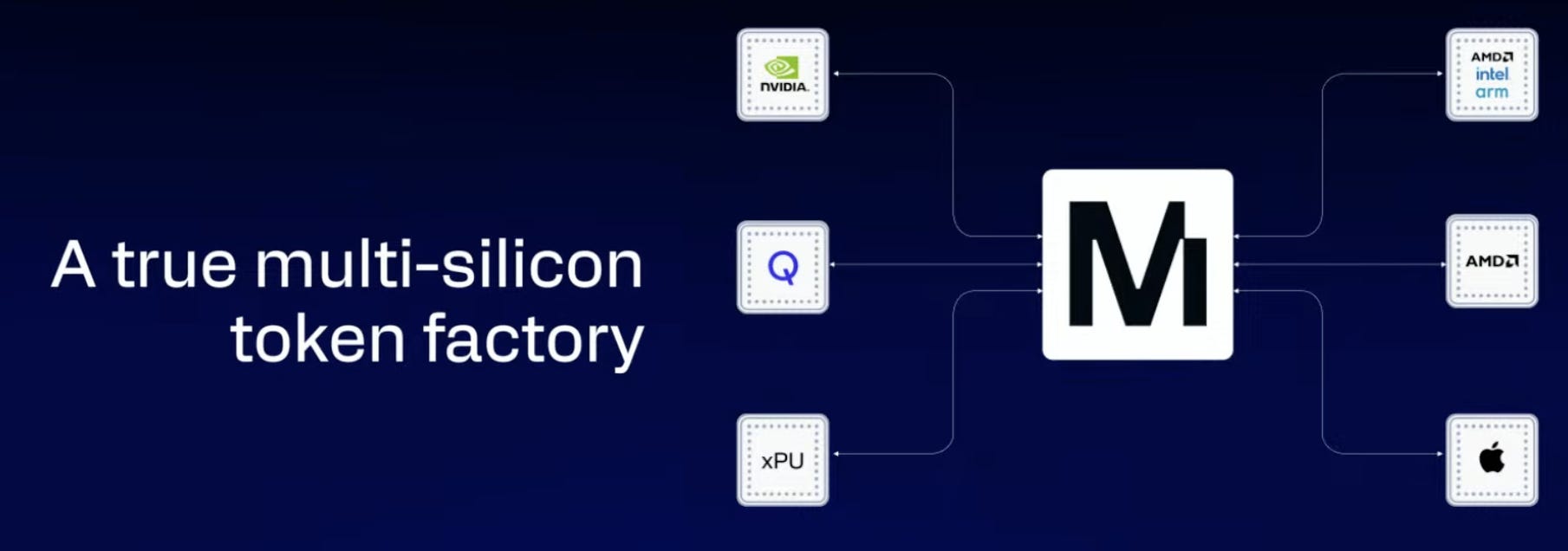
Qualcomm announced a lot of silicon. In my opinion, the announcement that matters is the acquisition of Modular, an all-stock deal valued at roughly $4 billion, expected to close in the second half of 2026.
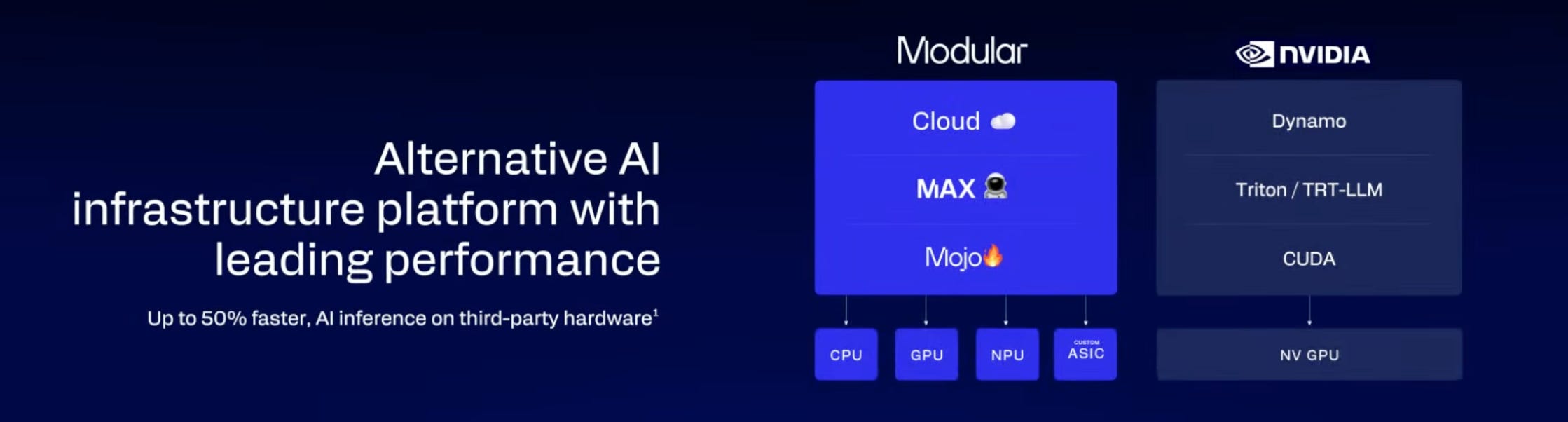
The industry has settled on a consensus that NVIDIA’s moat is as much its software (CUDA, NCCL, and Dynamo) as its GPUs and racks, and this is for good reason. The thing about the chips and hardware is, however impressive Qualcomm’s new High Bandwidth Compute (HBC) and the DRAM stacking turn out to be, how widely any of this silicon gets adopted depends on how good the software is. The software story Qualcomm projects matters as much as the peak numbers its hardware promises. Two examples:
MFU (Model FLOPs Utilization). How much of the theoretical FLOPS a real workload can actually extract is more a software problem than a hardware one.
Compiler/Kernel stack. This decides how painlessly a new model can be lowered onto the hardware.
A chip that’s hard to program is a chip that sits idle. Qualcomm can build the best inference engine in the world and it won’t matter if getting a model onto it is a six-to-twelve-month systems-integration project. Modular is the bet that it won’t be.
Also, while NVIDIA's moat still holds true for training, it is a different situation for inference. NVIDIA's Dynamo, the serving and orchestration layer which handles request routing, prefill and decode placement, KV-cache management, etc, is fairly new and still being invented. So you may think Qualcomm + Modular arrived late, but they really aren’t. Modular is unburdened by past design decisions, like NVIDIA needs to consider with their software stack. They get to start with a blank page and build natively for a heterogeneous, multi-vendor reality.
Why Chris Lattner matters
Chris Lattner co-founded Modular in 2022, and I’d admired his work for a long time before that. He created LLVM. He invented the Swift programming language at Apple, which is the foundation of iOS apps now. He led AI infrastructure work on Google’s TensorFlow team — where he also built MLIR, the compiler infrastructure a good chunk of this industry now stands on. He then ran engineering at the RISC-V startup SiFive.
He reminds me of Andrej Karpathy, or John Carmack. Deeply technical, able to explain a hard idea from first principles, and the rarer part, able to sit down and show you how to build the thing from scratch. That combination is the textbook definition of a 10x programmer. His podcast appearances are an absolute geek fest, dense with information and a joy to listen to. Chris Lattner is a winner.
What Lattner does, over and over, is write compilers and developer tooling from scratch and make them stick. That’s a rarer skill than it sounds, and it’s exactly the skill Qualcomm’s new AI infra stack needs.
Building exactly what the market asked for
By now the shape of what an LLM inference deployment actually needs is clear:
Fast memory, ideally something that doesn’t depend on HBM, which is supply-crunched into eternity.
A strong CPU roadmap, because agentic models put real orchestration and serving load back on the CPU.
A credible interconnect story for rack-scale deployment.
Qualcomm’s announcements map onto that list almost one to one.
High Bandwidth Compute (HBC) provides the first.
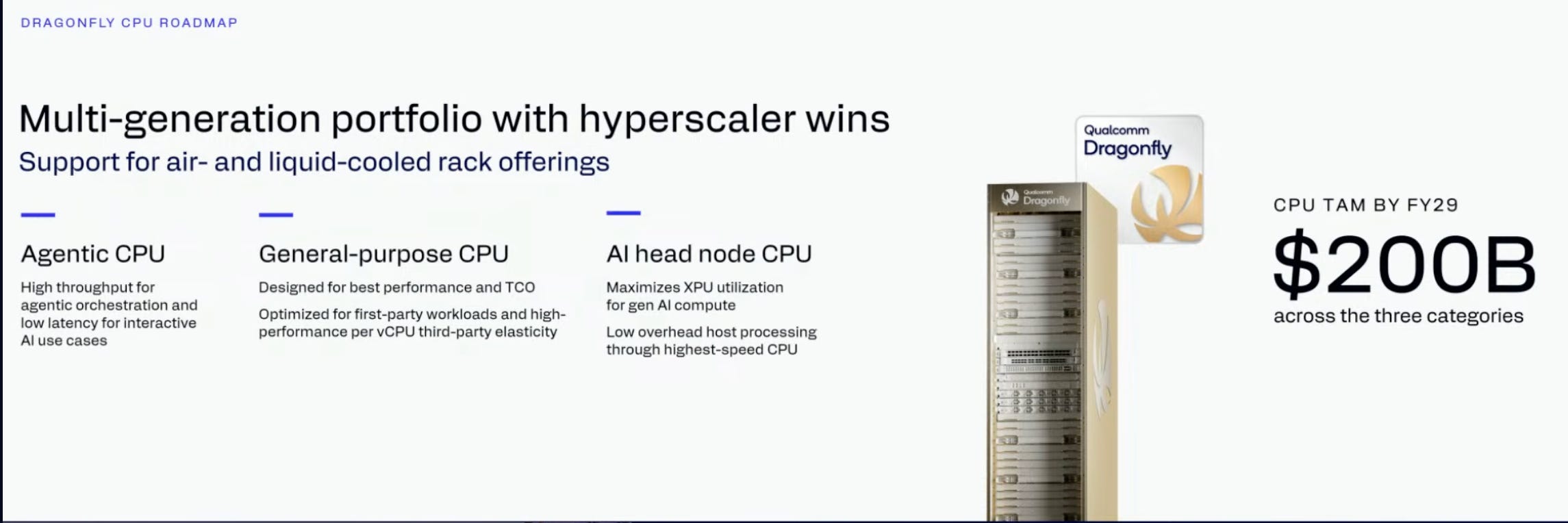
The C1000 CPU family provides the second, in three flavors:
an agentic CPU tuned for high-throughput orchestration and low-latency interactive AI
a general-purpose CPU aimed at performance-per-TCO and vCPU elasticity
an AI head-node CPU built to keep the XPUs fed and maximize accelerator utilization
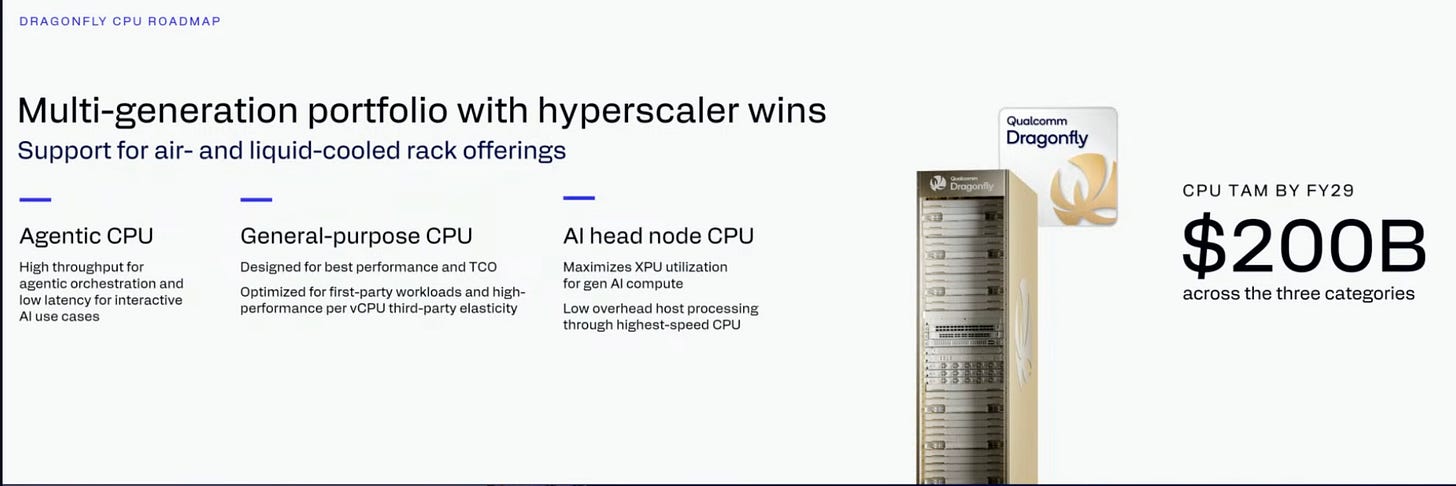
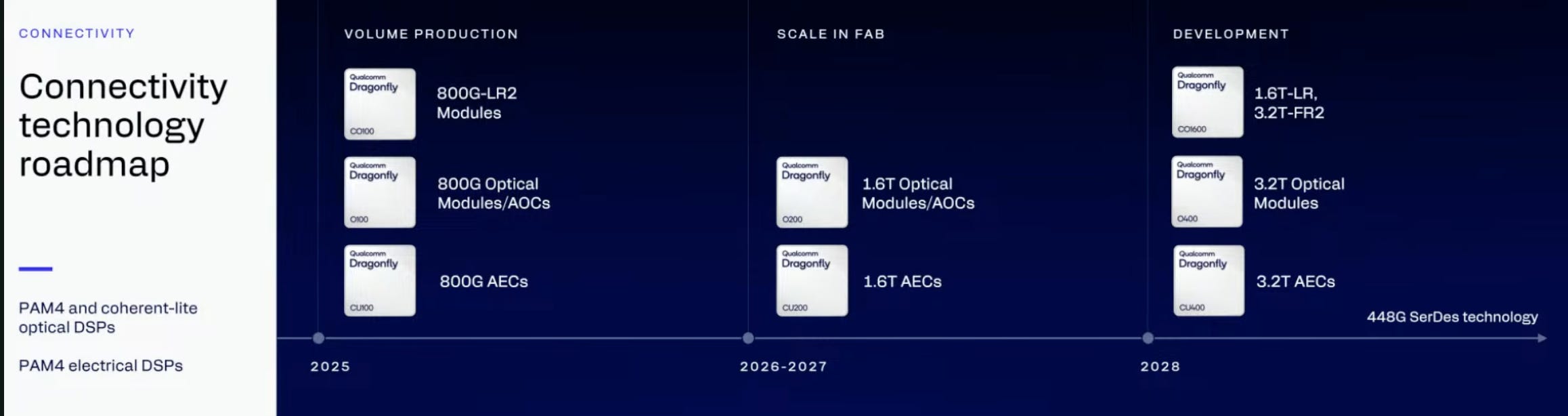
Dragonfly CPU roadmap [Source: QCOM] The acquisition of AlphaWave Semi provides the third, and they bring a wealth of useful plumbing. SerDes, PCIe and CXL, UCIe die-to-die interconnect IPs, custom-ASIC expertise, networking fabrics.
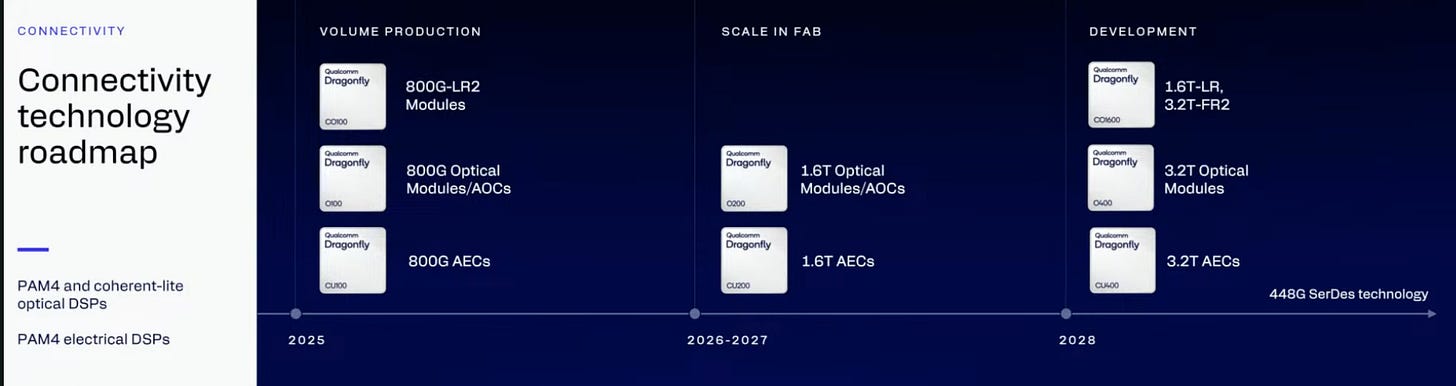
Connectivity roadmap that AlphaWave acquisition unlocks [Source: QCOM]
What I like is how unambitious this roadmap is, in the best sense. There’s no exotic bet buried in it. Qualcomm is late to the data center, and rather than trying to leapfrog with something clever, they seem to have listened to the market with open ears and built exactly what it’s asking for. Late entrants usually lose by chasing the leader’s last move; Qualcomm instead built to the requirements everyone already agrees on.
Having Zuckerberg confirm a multi-generation Meta agreement for C1000, and Satya Nadella signal that Azure would deploy HBC, was a calculated flex and proof to the investor community that the thesis they've built holds water.